
Domestic Battery 1st Degree Lawyer Little Rock
A Guide To DB1 Legal Process
If you have been charged with domestic battery in the first degree, you are facing one of Arkansas’s most serious violent-crime and domestic violence allegations. The standard offense is a Class B felony, but certain aggravating circumstances can raise the charge to a Class A felony or even a Class Y felony. Depending on the subsection and any enhancement, a conviction can carry between five years and life in prison.
Successfully defeating this domestic violence allegation requires the skilled hand of a trial attorney. Our attorneys, Kale Ludwig, Kyle Ludwig, Harry Warden (Warden Law Firm), and Weston Sizemore are ready to Simply Win your DB1 case.

Arkansas’s Most Serious Domestic Battery Charge
Like other domestic-related charges, the consequences can begin months before trial. Police can arrest you on the night of the event, a judge can order you to leave your home and family, and a separate order-of-protection case can restrict custody, visitation, and firearm possession. Because DB1 is always a felony, your criminal case will typically proceed in circuit court.
Don’t panic just yet. An arrest does not prove guilt. The State must prove the alleged act, required mental state, injury, qualifying relationship, and every fact used to increase the classification beyond a reasonable doubt.
At Ludwig Law Firm, we work backward from trial. We start by asking what the prosecution will show the jury, which witnesses it will call, and where its story depends on assumptions instead of hard facts. We then test the accusation against 911 audio, body-camera footage, photographs, medical records, digital evidence, witness accounts, injuries to both parties, and the physical scene.
If you face a DB1 charge in Little Rock, North Little Rock, Pulaski County, Northwest Arkansas, or elsewhere in the state, call Ludwig Law Firm at 501-868-7500. We prepare serious felony cases to win at trial.
Elements of a Domestic Battery 1st Degree
The Arkansas statute calls the offense “domestic battering in the first degree,” although people commonly search for domestic battery first degree, domestic battery 1st, or DB1.
Arkansas Code § 5-26-303 gives prosecutors seven possible theories. You can be charged with domestic battery in the first degree when the State alleges that you:
- Purposely caused serious physical injury to a family or household member with a deadly weapon;
- Purposely caused serious and permanent disfigurement or destroyed, amputated, or permanently disabled a bodily member or organ;
- Caused serious physical injury under circumstances showing extreme indifference to the value of human life;
- Knowingly caused serious physical injury to a family or household member you knew was 60 years old or older or 12 years old or younger;
- Committed conduct meeting the elements of domestic battery in the second or third degree after two qualifying domestic-battery or aggravated-assault convictions within the preceding 10 years;
- Purposely caused physical injury to a family or household member with a firearm; or
- Knowingly caused serious physical injury to a family or household member four years old or younger under circumstances showing extreme indifference to the value of human life.
The State does not have to prove the same mental state, injury, weapon, or surrounding circumstance under every theory. Your charging documents and discovery should identify the subsection the prosecutor intends to use, and your defense should target the elements of that specific allegation.
What Does The State Have to Prove?
The exact elements depend on the subsection charged, but prosecutors must prove that your conduct and the surrounding circumstances match the statute.
Questions we ask include:
- Was the other person legally a family or household member?
- Does the medical evidence establish physical injury or serious physical injury?
- Did you act purposely or knowingly as the charged subsection requires?
- Does the evidence establish circumstances showing extreme indifference to human life?
- Was the alleged object legally a deadly weapon?
- Was a firearm actually used to cause physical injury?
- Does the alleged victim’s age place the case within a protected-age provision?
- Does the State have two qualifying prior convictions within the required 10-year period?
- Were you defending yourself or another person from unlawful physical force?
- Do the witness accounts match the 911 call, body-camera footage, injuries, and physical scene?
- If prosecutors seek Class A or Class Y treatment, can they prove every fact required for the higher classification?
An injury does not establish who caused it. The presence of a firearm does not prove it was used. A family relationship does not prove criminal intent. The State must connect every element with admissible evidence.
Who Counts As A Family Or Household Member?
You do not have to be married to the other person for Arkansas’s domestic-battering laws to apply.
Under Arkansas Code § 5-26-302, a family or household member includes your:
- Current or former spouse;
- Parent or child, including a minor residing in the household;
- Relative by blood within the fourth degree;
- Current or former cohabitant;
- Person with whom you have or previously had a child in common; or
- Current or former dating partner.
Arkansas determines whether a dating relationship existed by examining the relationship’s length, type, and frequency of interaction. A casual relationship or ordinary business or social connection does not qualify by itself.
If the State cannot prove the required relationship, it cannot convict you under the domestic-battering statute. The alleged conduct could support a different charge, but the domestic relationship remains an essential element of DB1.
Physical Injury vs. Serious Physical Injury
DB1 uses both “physical injury” and “serious physical injury,” depending on the prosecution’s theory. Arkansas Code § 5-1-102 defines the terms separately.
Physical Injury
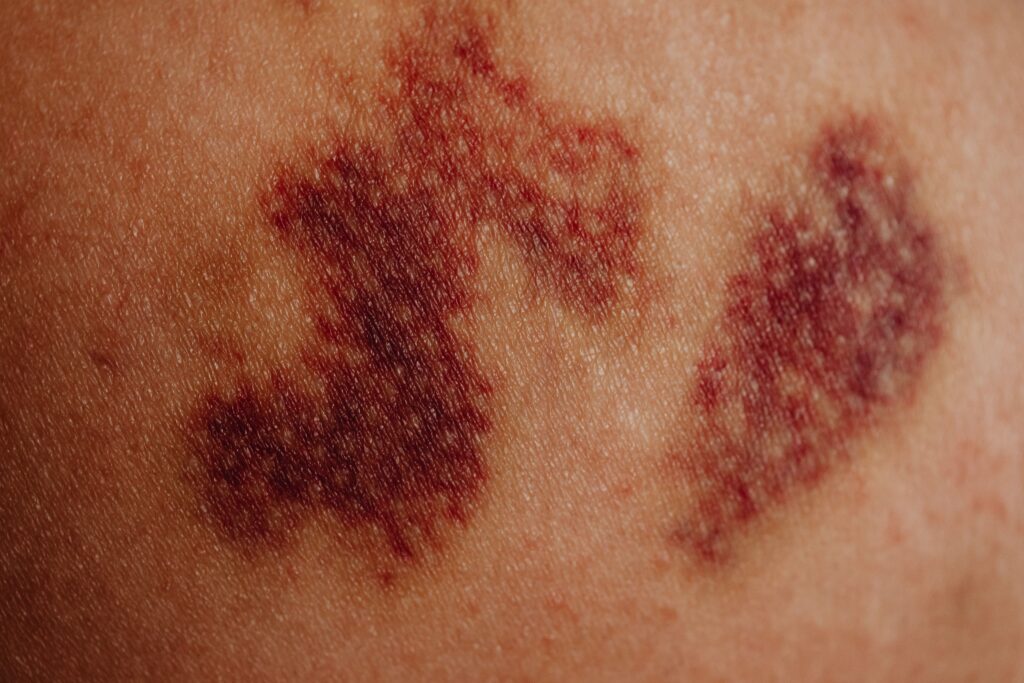
Physical injury includes impairment of physical condition, substantial pain, or bruising, swelling, or a visible mark associated with physical trauma.
Serious Physical Injury
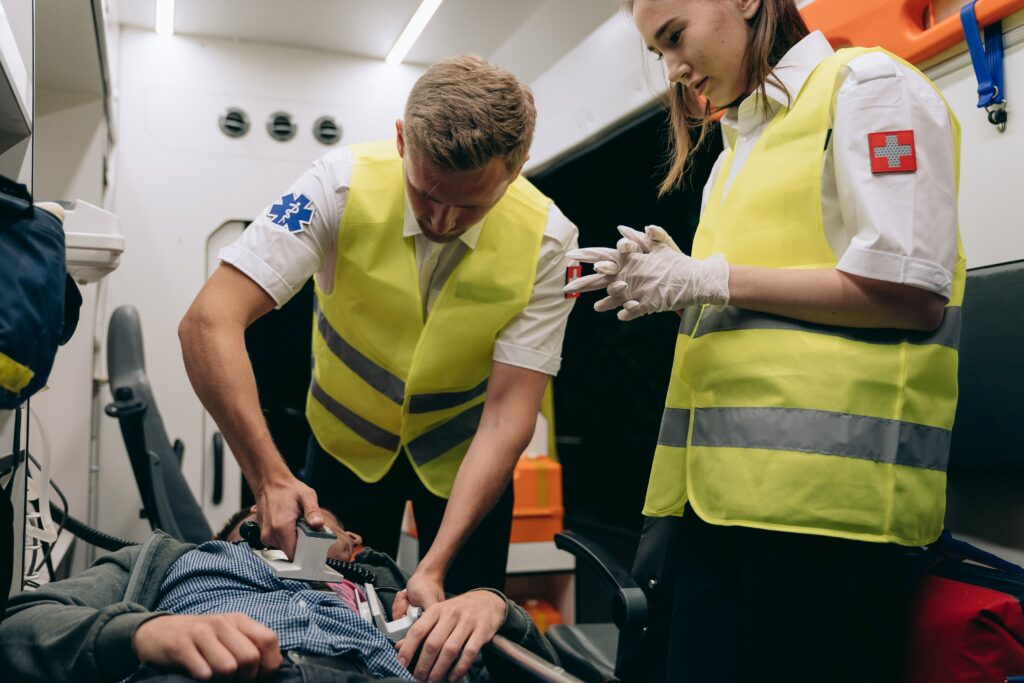
Serious physical injury means a physical injury that creates a substantial risk of death or causes protracted disfigurement, protracted impairment of health, or the loss or protracted impairment of the function of a bodily member or organ.
Why The Difference Matters
This distinction matters because the firearm theory under § 5-26-303(a)(6) requires physical injury, while several other DB1 theories require serious physical injury. We compare the allegation with photographs, medical records, diagnostic findings, treatment, recovery time, preexisting conditions, and testimony about how the injury occurred.
What Does “Deadly Weapon” Mean?
Arkansas law includes firearms within the definition of a deadly weapon. The term also covers specified weapons designed to inflict death or serious physical injury and other objects that are capable of causing death or serious physical injury in the manner they are used or intended to be used (AR Code § 5-1-102(4) (2025).
An ordinary household object can become part of a deadly-weapon allegation depending on how the State claims it was used. The presence of an object is not enough. Prosecutors must prove the object existed, its alleged use, and the connection between that use and the injury.
We examine photographs, fingerprints, DNA evidence, witness descriptions, the object’s location, injury patterns, and whether the physical evidence matches the alleged mechanism.
Domestic Battery First Degree Versus Second Degree
Both domestic battery in the first degree and domestic battery in the second degree are felonies, but DB1 applies to more severe injuries, more aggravated conduct, firearm allegations, certain repeat-offense situations, and circumstances involving young children.
| Issue | Domestic battery in the first degree | Domestic battery in the second degree |
|---|---|---|
| Starting classification | Class B felony | Class C felony |
| Typical injury requirement | Often serious physical injury | Physical injury or serious physical injury, depending on the subsection |
| Weapon provisions | Includes purposeful serious physical injury with a deadly weapon and purposeful physical injury with a firearm | Includes purposeful physical injury with a deadly weapon and reckless serious physical injury with a deadly weapon |
| Protected ages | Includes serious-injury provisions involving qualifying young or older family members | Includes injury provisions involving qualifying young or older family members |
| Repeat-offense provision | Can be established through qualifying current conduct plus two prior convictions within 10 years | A qualifying prior offense within five years raises DB2 to a Class B felony |
| Highest classification | Class Y felony | Class B felony |
DB1 Arrests
Warrantless Arrests
Arkansas Code § 16-81-113 permits a warrantless arrest when an officer has probable cause to believe qualifying domestic abuse occurred within the preceding four hours, or within the preceding 12 hours for cases involving physical injury, even when the officer did not witness the event.
When officers hear conflicting accounts, the statute directs them to evaluate each account separately and identify the predominant aggressor. They consider:
- Statements from the parties and witnesses;
- The extent of each person’s injuries;
- Evidence of self-defense;
- Prior domestic-abuse complaints officers can reasonably determine; and
- Other relevant circumstances.
The arrest decision controls what happens at the scene. It does not prove guilt in circuit court.
We examine whether officers documented your injuries, interviewed available witnesses, preserved recordings, considered self-defense, inspected the scene, and tested the other person’s account against the physical evidence.
What Happens After The Arrest?
Because DB1 is a felony, your case typically proceeds through circuit court. The process typically includes:
- Arrest and booking;
- First appearance and a release inquiry;
- Bond and no-contact conditions;
- Arraignment and entry of a plea;
- Discovery and defense investigation;
- Pretrial motions and hearings;
- Negotiation when appropriate;
- Jury trial, dismissal, or another lawful resolution; and
- Sentencing and compliance if a conviction occurs.
Your exact schedule depends on the court, custody status, discovery, motions, and complexity of the evidence.
Facing legal challenges is incredibly stressful, but your aggressive litigating style, meticulous preparation, and courtroom advocacy completely changed the experience for me.
A.J.
Bonds, No-Contact Orders, and Protection Orders
A DB1 allegation can lead to both a criminal prosecution and a separate civil order-of-protection proceeding. Either court can restrict where you live, whom you contact, whether you possess weapons, and other parts of your daily life. Under Arkansas Code § 9-15-205, a final protection order can also address custody, visitation, support, specified locations, and household pets. Follow every order exactly, even if the other person calls you or invites you home, because only a judge can change the restrictions. Your attorney can request a modification, but the existing terms remainenforceable until the judge approves it. Because statements made in one proceeding can affect the other, coordinate your strategy before testifying, signing an affidavit, or agreeing to factual language.
Domestic Battery First Degree Penalties
Domestic battery in the first degree can be classified as a Class B, Class A, or Class Y felony.
| Classification | When it applies | Incarceration range | Maximum fine |
|---|---|---|---|
| Class B felony | Standard domestic battery in the first degree when no higher classification applies | Five to twenty years in prison | Up to $15,000 |
| Class A felony | The alleged victim was a woman you knew or reasonably should have known was pregnant, or you committed a qualifying domestic offense within five years | Six to thirty years in prison | Up to $15,000 |
| Class Y felony | Purposeful permanent disfigurement, destruction, amputation, or permanent disability of a bodily member or organ under § 5-26-303(a)(2), or the protected-child conduct described in § 5-26-303(a)(7) | Ten to forty years or life in prison | Consult counsel regarding fines, court costs, and restitution |
When Does a DB1 Become A Class A Felony?
Pregnancy Enhancement
Domestic battery in the first degree becomes a Class A felony when the offense was committed against a woman you knew or reasonably should have known was pregnant, unless the conduct is already classified as a Class Y felony.
The State must prove more than pregnancy alone. It must also prove the knowledge component required by the statute.
Qualifying Prior Offense Within Five Years
DB1 can also become a Class A felony when you committed at least one qualifying offense within five years of the present allegation. The listed offenses include:
- Domestic battery in the first degree;
- Domestic battery in the second degree;
- Domestic battery in the third degree;
- Aggravated assault on a family or household member; or
- An equivalent offense under Arkansas law or the law of another state or foreign jurisdiction.
We audit the State’s enhancement evidence instead of accepting a criminal-history report at face value. Prosecutors must connect the judgment to you, establish that the offense qualifies, and prove that it falls inside the statutory period.
When is DB1 a Class Y Felony?
DB1 becomes a Class Y felony under two specific statutory theories.
The first applies when the State alleges that you acted with the purpose of seriously and permanently disfiguring a family or household member or destroying, amputating, or permanently disabling a bodily member or organ, and that you caused the intended injury.
The second applies when the State alleges that you knowingly caused serious physical injury to a family or household member four years old or younger under circumstances showing extreme indifference to the value of human life(Arkansas Code § 5-26-303(b)(2)(A-B)).
Class Y is Arkansas’s most severe felony classification outside offenses carrying a separate penalty structure. A conviction carries ten to forty years or life in prison. Because the sentencing exposure is so severe, the precise subsection, mental state, injury evidence, age evidence, and surrounding circumstances require close examination.
The Lautenberg Amendment: Gun Rights and Record Sealing
A felony conviction typically triggers federal and state firearm restrictions. A qualifying protection order can also create a federal firearm prohibition while the order remains in effect under 18 U.S.C. § 922(g)(8).
Do not assume that record sealing automatically restores firearm rights or removes every federal consequence. Eligibility to seal a conviction, restoration of state rights, and the effect under federal law require separate analysis of the judgment and applicable statutes.
Can The Alleged Victim Drop Charges?
The alleged victim can correct inaccurate information, provide evidence, and tell the prosecutor what outcome the person wants. The alleged victim cannot personally dismiss a felony charge.
Once the State files the case, the prosecutor decides whether to continue, amend, negotiate, or dismiss it, subject to the court and applicable law.
The State can continue without cooperative testimony if other admissible evidence supports the prosecution.
That evidence can include 911 audio, body-camera footage, photographs, medical records, statements, digital messages, admissions, and testimony from other witnesses.
Do not pressure anyone to change a statement, ignore a subpoena, or avoid court. Do not contact the other person when an order bars contact. Let your attorney handle communications through lawful channels.
Evidence in DB1 Cases
The initial 911 call and dispatch records
Body-camera, dash-camera, and patrol-car recordings
Photographs taken by police and the parties
Medical and emergency-treatment records
Recorded and written statements
Text messages, call logs, emails, and social-media content
Prior inconsistent statements
Common Defense Issues In Domestic Battery First Degree Cases
No single defense applies to every case. The evidence may support one or more of the following issues.
Self-Defense Or Defense Of Another
Arkansas Code § 5-2-606 permits reasonable physical force to defend oneself or another person from what the person reasonably believes is the use or imminent use of unlawful physical force.
No Physical Injury
The State may have evidence of an argument or unwanted contact but insufficient proof of physical injury. Photographs, medical records, pain descriptions, timing, and alternative causes all matter.
Accident Or Missing Mental State
An injury does not automatically establish purposeful or reckless conduct. The defense may challenge whether the evidence proves the mental state charged. Negligence supports DB1 only under the statutory deadly-weapon theory.
Wrong Person ID'd As The Aggressor
Officers may arrive after the incident and hear conflicting versions. Injuries, witness accounts, prior threats, physical evidence, and the sequence of events may show that police arrested the wrong person or misunderstood defensive conduct.
Inconsistent Or Unreliable Statements
Stress, intoxication, anger, fear, incomplete questioning, or an ongoing family dispute can affect early accounts. We compare statements across the 911 call, body camera, written reports, medical records, texts, interviews, and testimony.
The Relationship Does Not Qualify
The State must prove a family-or-household-member relationship. A casual acquaintance or ordinary social relationship does not automatically satisfy the dating-relationship definition.
Lack of Evidence For Felony
The State may lack admissible proof that the accused knew or should have known of a pregnancy. A prior judgment may belong to someone else, fall outside five years, or fail to qualify as an equivalent offense.
Constitutional Or Evidentiary Problems
Statements, searches, recordings, hearsay, digital evidence, and prior-act evidence remain subject to constitutional and evidentiary rules. A domestic allegation does not create an exception to those protections.
First Court Appearance: Plea & Arraignment Tips
At arraignment, the court identifies the charge and receives a plea. Entering a not-guilty plea preserves the right to obtain discovery, investigate, file motions, negotiate when appropriate, and require the State to prove every element. It is essential that you show up dressed respectfully, and that you treat the judge with upmost respect.
Pretrial Motions And Case Preparation
Trial preparation — also known as the pre-trial phase — is the foundation for a good result. Our defense team will file motions, prepare cross-examination using the words each witness previously used, and compare police conclusions with objective evidence. Our goal is to identify facts the investigation overlooked, and use those to our advantage.
Why Having A Trial Lawyer Matters For Domestic Battery Charges
Ludwig Law Firm has handled trial work for more than 43 years. That experience shapes how we investigate a domestic-battery allegation from the first meeting.
We prepare every case as though it may go to trial. That means preserving the 911 call, studying body-camera footage, tracing inconsistent statements, testing the injury evidence, examining self-defense, and auditing every prior judgment alleged for enhancement.
Also note — the accused has the right to remain silent. The defense does not have to prove innocence. Whether the client should testify is a strategic decision made after careful preparation.
LITTLE ROCK 1st DEGREE DOMESTIC BATTERY
Frequently Asked Questions
Gene Ludwig founded Ludwig Law Firm in 1982, starting out as a personal injury trial lawyer. Today, our attorneys use that full-scale trial mindset to win 1st degree domestic battery and criminal defense cases in Little Rock, central Arkansas, and Northwest Arkansas.
Our attorneys have furnished this FAQ section just for you. If your answer wasn’t answered here, feel free to call us or submit a form with your question.
At Ludwig Law Firm, We Simply Win domestic violence defense. Call our office today for your free consultation.
Is Domestic Battery in the First Degree Always a Felony?
Yes. The standard offense is a Class B felony. Certain enhancements make it a Class A felony, while the conduct described in § 5-26-303(a)(2) and (a)(7) is a Class Y felony.
How Much Prison Time Can You Face for DB1?
A Class B felony carries five to twenty years. A Class A felony carries six to thirty years. A Class Y felony carries ten to forty years or life.
Does DB1 Always Require Serious Physical Injury?
No. Most theories involve serious physical injury or permanent injury, but the firearm provision requires purposeful physical injury caused with a firearm. The repeat-offense theory can also use conduct that meets the elements of domestic battery in the second or third degree.
Can a Prior Misdemeanor Domestic-Battery Conviction Support DB1?
It can contribute to a DB1 charge under the repeat-offense theory if the present conduct and two qualifying prior convictions satisfy § 5-26-303(a)(5). The State must prove every part of that statutory theory.
Does the Alleged Victim Have to Be Your Spouse?
No. Arkansas law also covers former spouses, parents, children, certain relatives, people who live or previously lived together, people who share a child, and current or former dating partners.
Can the Alleged Victim Drop a DB1 Charge?
No. The alleged victim can provide information and express a preference, but the prosecutor controls whether the criminal case continues, changes, or ends.
Can a No-Contact Order Be Changed?
A judge can modify a no-contact condition when the facts support a change. Until the judge signs a modification, the existing order remains enforceable even if the other person wants contact.
What Should You Do After a DB1 Arrest??
Follow every court order, preserve potentially helpful evidence, avoid discussing the facts with witnesses or on social media, and contact a felony criminal-defense lawyer promptly.
Why Early Representation Matters
Domestic-battery evidence changes quickly. Injuries heal. Surveillance video is overwritten. Messages disappear. Witnesses compare stories. Temporary protection-order hearings and criminal court dates may arrive within days.
Early representation gives the defense time to preserve recordings, photograph injuries, identify witnesses, obtain medical evidence, challenge bond conditions, coordinate related proceedings, and prevent avoidable communications from damaging the case.
Do not discuss the allegation on social media. Do not contact the alleged victim in violation of an order. Do not ask anyone to change a statement. Preserve the evidence and speak with counsel.
If you or a loved one faces domestic battery in the first degree, call Ludwig Law Firm at 501-868-7500 or visit ludwiglawfirm.com. We represent clients in Little Rock, Northwest Arkansas, and throughout the state. We Simply Win reflects our commitment to preparation and advocacy, but no law firm can promise a particular result.